
– Get out of pain faster and easier
Shoulder Pain & Shoulder Injuries Treatment
Thoughtful, personalized care for shoulder pain or injury that is getting in the way of work, sleep, exercise, sport, and daily movement.
Care that starts with listening.
– A clearer understanding
Understanding Shoulder Pain & Injuries
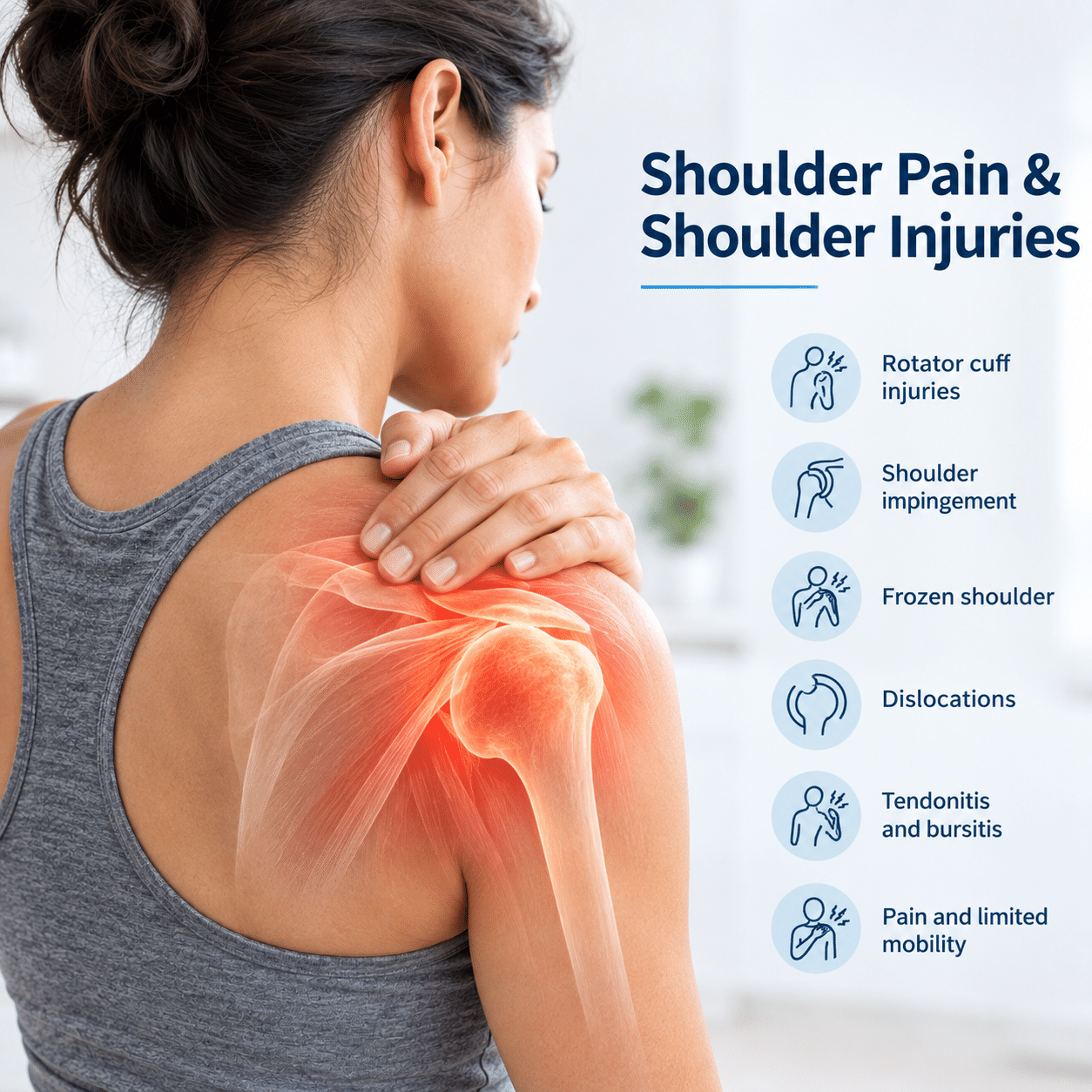
Shoulder pain can affect the joint itself, the muscles and tendons around it, or the surrounding neck and upper-back region. It can develop gradually with repeated use or begin after a sudden movement, fall, or injury.
Symptoms may be short-lived, recurring, or persistent. Shoulder pain can affect reaching, lifting, carrying, dressing, sleeping, work, sport, and confidence in everyday movement. A focused assessment helps clarify appropriate next steps.
– How it can feel
Common Symptoms of Shoulder Pain
Shoulder pain may feel different from person to person. These are common ways it can affect comfort and movement.
Shoulder Pain
Discomfort in the front, side, top, or back of the shoulder that may change with movement or activity.
Pain with Reaching
Difficulty or discomfort reaching overhead, behind the back, or out to the side.
Weakness
A feeling of reduced strength or confidence when lifting, carrying, pushing, or pulling.
Stiffness
A feeling of reduced ease of movement, especially after rest, activity, or prolonged positions.
Night Pain
Shoulder discomfort that makes it difficult to settle into a comfortable sleeping position.
Clicking or Catching
A sensation of clicking, catching, or instability with certain shoulder movements.
What Can Cause Shoulder Pain?
Shoulder pain can have more than one contributing factor. It may relate to activity changes, repetitive loading, movement patterns, or an injury. Sometimes, a clear single cause is not identifiable.
Common contributors can include sports or workplace injuries, falls, sudden movements, repetitive reaching or lifting, changes in training, and age-related changes. An assessment looks at the factors most relevant to you.
– Your care, step by step
How We Approach Shoulder Pain
We make the process clear from the start so you understand the assessment, the options, and how your plan connects to your daily life.
01
Initial Assessment
We discuss your symptoms, medical history, lifestyle, work, activity level, and the movements that are currently difficult.
02
Movement & Function Assessment
Your chiropractor completes a relevant assessment of movement, function, and the factors that may be influencing your symptoms.
03
Individualized Treatment Plan
We explain the findings and collaborate with you on a plan that fits your needs, preferences, and goals.
04
Progress Monitoring
We reassess your response to care, track progress toward your goals, and adjust recommendations when appropriate.
– Treatment options
Shoulder Pain Treatment at Crown Point Rehab
Your plan may bring together different approaches selected for your assessment and goals. Treatment is always discussed with you first.
Chiropractic care
Manual therapy
Soft tissue techniques
Mobility exercises
Strengthening & rehabilitation
Education & self-management
Treatment is selected after assessment, based on your needs, preferences, and clinical judgment.
– Evidence-informed care
Benefits of Chiropractic Care
When appropriate, chiropractic care may support recovery and function. Individual outcomes vary, and your chiropractor will discuss what is realistic for your situation.
Mobility
Support comfortable movement and confidence in everyday activities.
Pain management
Help manage certain musculoskeletal pain presentations as part of an individualized plan.
Function
Work toward the movements and tasks that matter in your work, home, or sport.
Recovery
Use practical guidance and follow-up to support a gradual return to normal activity.
– When to get help
When Should You Seek Professional Help?
Consider an assessment when shoulder pain is persistent or recurring, affects daily activities, limits mobility or strength, or follows an injury. An evaluation can help clarify appropriate care options and next steps.
When back pain may need urgent attention
– Local care
Shoulder Pain Treatment in Hamilton, ON
Crown Point Rehab is located at 67 Kenilworth Avenue North in Hamilton. We welcome patients looking for thoughtful chiropractic care, acupuncture, and personalized rehabilitation in the community.
Appointments are currently offered Monday and Thursday, 10:00 am to 7:00 pm. Call or book online to confirm availability and ask about access or parking before your visit.
Frequently Asked Questions
Please reach us at info@crosstownrehab.ca if you cannot find an answer to your question.
What causes shoulder pain?
Shoulder pain can have many contributing factors, including activity changes, repetitive loading, injuries, falls, and age-related changes. An assessment considers what is most relevant to you.
How long does shoulder pain usually last?
Recovery varies depending on the nature of the symptoms, history, activity demands, and many other factors. Your chiropractor can discuss a realistic plan after assessment.
Can chiropractic care help with shoulder pain?
Whether chiropractic care is appropriate depends on your individual situation. An assessment helps determine the care options that may be useful and when another provider may be a better fit.
What happens during a shoulder pain assessment?
Your appointment includes a conversation about your symptoms, history, daily life, goals, and a relevant movement, strength, and function assessment. Your chiropractor then discusses appropriate options with you.
Can I exercise with shoulder pain?
That depends on your symptoms and the activity. Your chiropractor can help you discuss suitable movement options and gradual progression based on your assessment.
How often should I receive treatment?
That depends on your symptoms, goals, response to care, and preferences. Your chiropractor will discuss follow-up recommendations that fit your plan.
When should I see a doctor for shoulder pain?
Seek urgent medical attention after significant trauma, a deformity, inability to move the arm, sudden severe weakness or numbness, or rapidly worsening symptoms. Otherwise, consult an appropriate health professional if symptoms are persistent, recurring, or affecting daily activities.